
Beginning Again: A Month Solo in Lisbon

Published: July 16th, 2026
Article Overview
Thoughts on my month in Lisbon as a solo traveler — by Sherri Bradley
I didn't go to Lisbon to escape my life. I went to see it more clearly. What follows are the honest, unpolished reflections of one month spent living, wandering, and slowly opening up in a city that met me exactly where I was — from the nerves of that first flight, to the friendships I didn't expect, to the quiet realization of what I actually wanted to carry home.
Part 1: The First Threshold
Portugal. Alone.
The idea both thrilled and unnerved me. I wondered what it would mean to truly be on my own—not just physically, but emotionally untethered. Could I loosen my grip on the life I've always known long enough to imagine something different? Maybe even begin again?
I found myself thinking about love—not the kind tied to obligation or permanence, but something lighter, freer. A connection. A presence. Someone to share moments with, without the weight of expectation.
This trip feels like more than a change of scenery. It feels like a test of who I might become if I allow myself to expand just a little. This month, I want to move more, say yes more, open myself to new interests, new people, new rhythms. I want to write, to notice, to participate in my own life more fully. Somewhere between this gate and whatever comes next, I have the chance to begin again. And for the first time in a long while, that feels possible.
By the time I reached Philadelphia, I had already crossed the first threshold. I remember sitting there after rushing through the day, eating a quick sandwich, waiting for a 9 p.m. flight that would carry me somewhere both foreign and quietly hoped for. I wondered, not for the first time, What have I gotten myself into? And yet, beneath the uncertainty, there was something else—something steadier. A quiet insistence that this was something I needed to do. Not for anyone else. For me. Even if it felt completely against my nature.
My apartment is spacious. It's chilly and rainy outside but I'm fine for the night. That evening, after my first real shower since arriving, I felt like myself again—reset, grounded. Lisbon revealed itself as something beautiful and layered, a place I was only just beginning to understand.
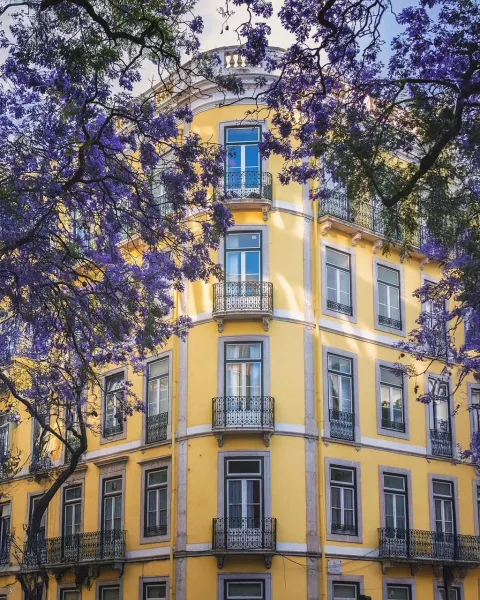
Went to bed early.
On the first morning, I woke too early, my body unsure of time, and wandered out to find the small café where the group was meeting in person for the first time. I explored just a little, careful and observant, watching the city before it fully woke. When I met the others, I felt that familiar distance—like I was hovering just outside the circle. Some of them clicked instantly, gravitating toward one another with ease. I noticed it, wondered about it, but didn't push. Instead, I learned the metro. I followed the group downtown. And then, quietly, I let myself slip away.
I walked without direction, stopped in small shops, realized I had forgotten something as ordinary as deodorant, and laughed at myself. I paused for a slice of pizza, sat with my thoughts, and let the day unfold without expectation.
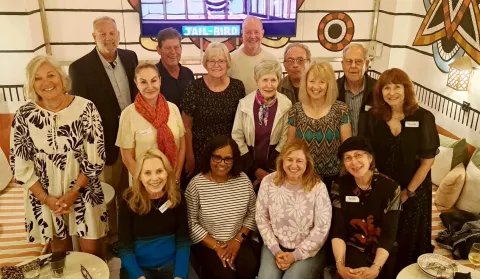
There was a welcome party later that same day at Mama Shelters, where conversations were begun. Names began to settle into familiarity—Judy, Pat, Bob, Raychelle, John, Marta, Beth, Dorothy. Faces turned into people. Strangers softened into companions. Walking home afterward, I realized I was no longer entirely outside looking in.
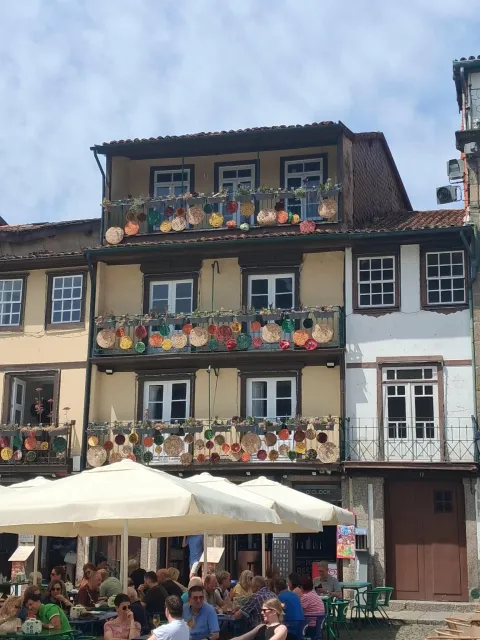
Lisbon met me slowly. It's a city of hills and pauses, of effort rewarded by view. I walked more than I meant to, climbed more than I expected, and often found myself slightly lost. But there was something comforting in that. My days began to take on a rhythm I hadn't realized I needed—movement, rest, observation. A long walk followed by a long lunch. A crowded market followed by quiet in my room. I started to notice things I usually rush past. The way people linger over coffee. The hum of conversation spilling out of open doorways. The quiet intimacy of watching someone across the street go about their ordinary day. Travel, I realized, isn't always about what you see—it's about how long you're willing to look.
Part 2: Saying Yes
One afternoon, I went on my own and followed narrow streets into a food and wine tour—six stops, each one unfolding like a small story. There were glasses of vinho verde and richer reds, bites of cod, chouriço, cheeses, and unexpected sweetness—pumpkin jam, chocolate, cherry liqueur. Our guide was lively and warm, weaving humor and history together, making each place feel like a discovery rather than a destination. I met people from everywhere—Melbourne, Costa Rica, San Francisco. Lives intersecting briefly, meaningfully, before continuing on.
That night, walking home, I realized how much I had said yes to in just one day. A long walk to a chef's home for lunch—course after course, each one thoughtful and beautifully prepared. Conversations lingering as long as the food. Later in the week wandering through neighborhoods where history seemed to rise up from the sidewalks themselves—the Baixa, Chiado, steep hills where the old funicular once climbed. We visited a bookstore said to be the oldest in the world. Stood in places where the first espresso was served. Sat down to meals that stretched into hours, filled with conversation, laughter, and the simple act of being present.
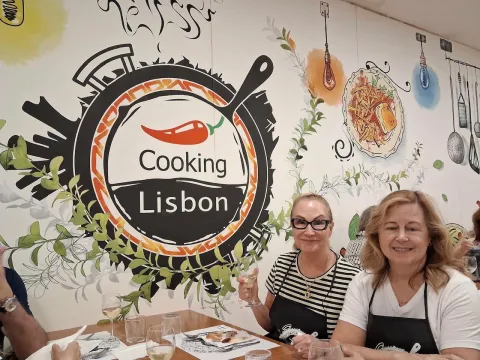
I met up with Dorothy, shopped a little, talked easily. I accepted invitations. Made plans. Said yes more often than no. That, more than anything, felt like the real journey.
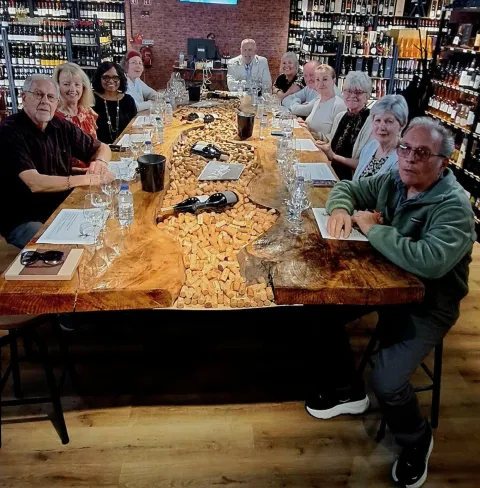
There were small, personal victories. Sitting next to Katy at a wine tasting, discovering how easily we connected. Realizing I liked her—really liked her—and that we clicked. Not forcing conversation, not overthinking it. Just letting it be.
There were people, too, who shaped the experience in unexpected ways. Dorothy, especially. What began as a simple lunch turned into hours of conversation—about her life, her losses, her resilience. She spoke openly about losing her son, about continuing forward in a life that had been reshaped by grief. There was something grounding in her honesty. Something that made my own questions feel both smaller and more important at the same time.
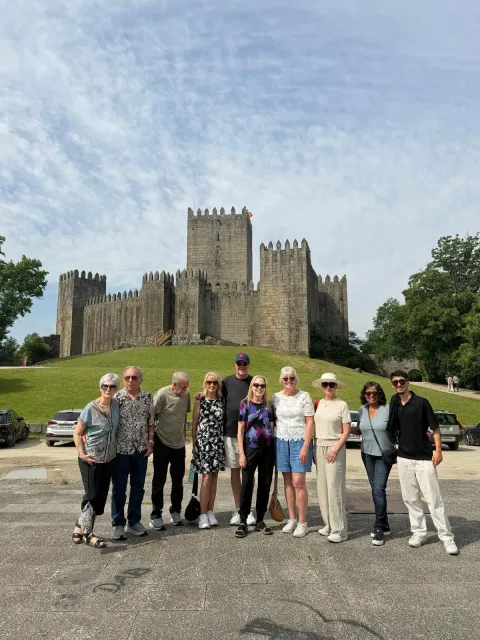
Travel compresses connection. Strangers become meaningful quickly, without the slow buildup of everyday life. And in those moments, I found myself reflecting—not just on them, but on me. I've never been someone who roots deeply in others. I've always moved a little more independently, a little more loosely attached. Watching people like Dorothy, and even my own friends, I began to wonder what that meant. Was it freedom? Or distance? A choice—or a habit I never questioned?
By the last days, the city felt familiar. I walked to lunch without thinking. Took my time. Not rushed, not hesitant. Just… comfortable. We said our goodbyes. Promised to stay in touch in the way people do when they've shared something meaningful but temporary. And I found myself reflecting—not on everything I had seen, but on how I had felt. More open. More willing. More present.
And then, near the end, everything shifted. Flights were canceled. Plans unraveled. I found myself stuck near the airport, rebooking, waiting, adjusting. It was frustrating, inconvenient—an abrupt disruption to the sense of flow I had settled into. But it also felt strangely fitting. Travel doesn't end cleanly. It resists neat conclusions.
When I finally made it home, the transition was both immediate and disorienting. Laundry, errands, familiar routines. Life resumed exactly where I had left it—and yet, I didn't feel exactly the same. Nothing dramatic had changed. My circumstances were largely the same. But something internal had shifted, just enough to notice. I felt… unsettled. A little lost. But not in the way I might have before. This felt different—less like confusion and more like awareness. As if the trip had quietly loosened something in me, created space where certainty used to be.
I realized I didn't want to escape my life. I didn't want to stay in Portugal or reinvent myself into someone entirely new. What I wanted was subtler, but harder: to live my existing life differently. With more intention. More openness. More willingness to step beyond the patterns I've settled into.
Travel didn't solve anything. It didn't provide answers or clarity in the way people sometimes hope it will. Travel didn't turn me into someone else. It just showed me a version of myself that had been there all along—waiting for the right moment, the right place, to step forward. It showed me the edges of my life—the places where I've been standing still, the habits I've mistaken for choices, the quiet ways I hold myself back. And once you see those edges, it's hard to unsee them.
I came home to the same life. But I'm not entirely the same person who left. Somewhere between the hills of Lisbon, the cliffs of Nazaré, and the quiet flow of the Douro, I think I've changed. And for now, that feels like enough.
Part 3: Forward, Not Away
There were days filled with exploration. A visit to the National Pantheon, where I stood on the terrace and took in a sweeping view of the river and the city, Lisbon unfolding in every direction. Wandering through the flea markets. Getting slightly lost, then found again. There were stories everywhere. On a walk one afternoon, I met a woman still working at 68, balancing life, travel, and independence in her own way. She spoke of future plans—Spain, the Camino—always moving forward. I admired that. Not necessarily wanting the same path, but recognizing the courage it takes to keep choosing motion. Sometimes connection came in the simplest forms.
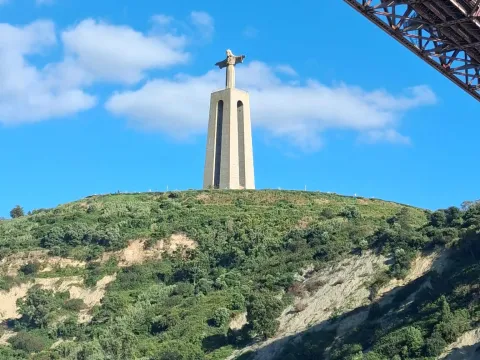
Some days carried me farther. A minivan tour took us through Óbidos and Nazaré—charming, windswept, and full of character. Nazaré, especially, lingered in my mind: a big, lively coastal town with the sea stretching endlessly beside it. Lunch by the water tasted better for the view alone.
Sintra was something else entirely—lush, storybook-like, almost unreal. With Frederico as our guide, the town unfolded like a painting: narrow streets, bright facades, and the palace rising out of the hills. It was beautiful in a way that felt carefully composed, as if every detail had been placed just so.
Porto brought a different energy—earthier, perhaps, but no less enchanting. We crossed the bridge for port tastings, wandered through bookstores said to have inspired Harry Potter, and lingered over meals that stretched late into the evening. The Douro Valley was a highlight: green, terraced hills rolling down to the river, a slow boat ride, and wine that tasted of the landscape itself. These were the days where I stopped thinking so much. And simply experienced.
Back in Lisbon, life settled again into small rituals—walks to cafés, metro rides, conversations over wine. There were rooftop gatherings, shared meals, and the easy camaraderie that comes from being far from home together. Yet even in those moments, there were quieter undercurrents. I found myself reflecting more—about relationships, about what I wanted, about what I was ready to let go.
Not every day was easy. There were long, hot afternoons, a lingering cold that slowed me down, and moments of homesickness that caught me off guard. I spent one day mostly indoors, watching the street from the window, noticing the ordinary rhythms of life, the simplicity of routine. And in that stillness, something became clear.
I realized I didn't want to stay—not in Portugal, not in this in-between version of my life. I wasn't meant to turn this trip into a permanent escape. More surprisingly, I admitted to myself that I didn't feel called to turn these experiences into a grand creative project. What I did feel was the need for something new—a direction, a goal, a sense of forward movement.
By the time June arrived, there were final outings—Cascais by the sea, a farewell rooftop gathering, one last walk through familiar streets. Goodbyes came, each one carrying a mix of gratitude and quiet sadness.

Andrew Motiwalla
Andrew is the Founder of The Good Life Abroad and has worked in the travel industry for over 30 years. His first experience living abroad was as a Peace Corps volunteer.
He is also the Founder of Discover Corps, a company specializing in meaningful vacations for families.
Learn More about Andrew Motiwalla